Yoga was never meant to be a separate life.
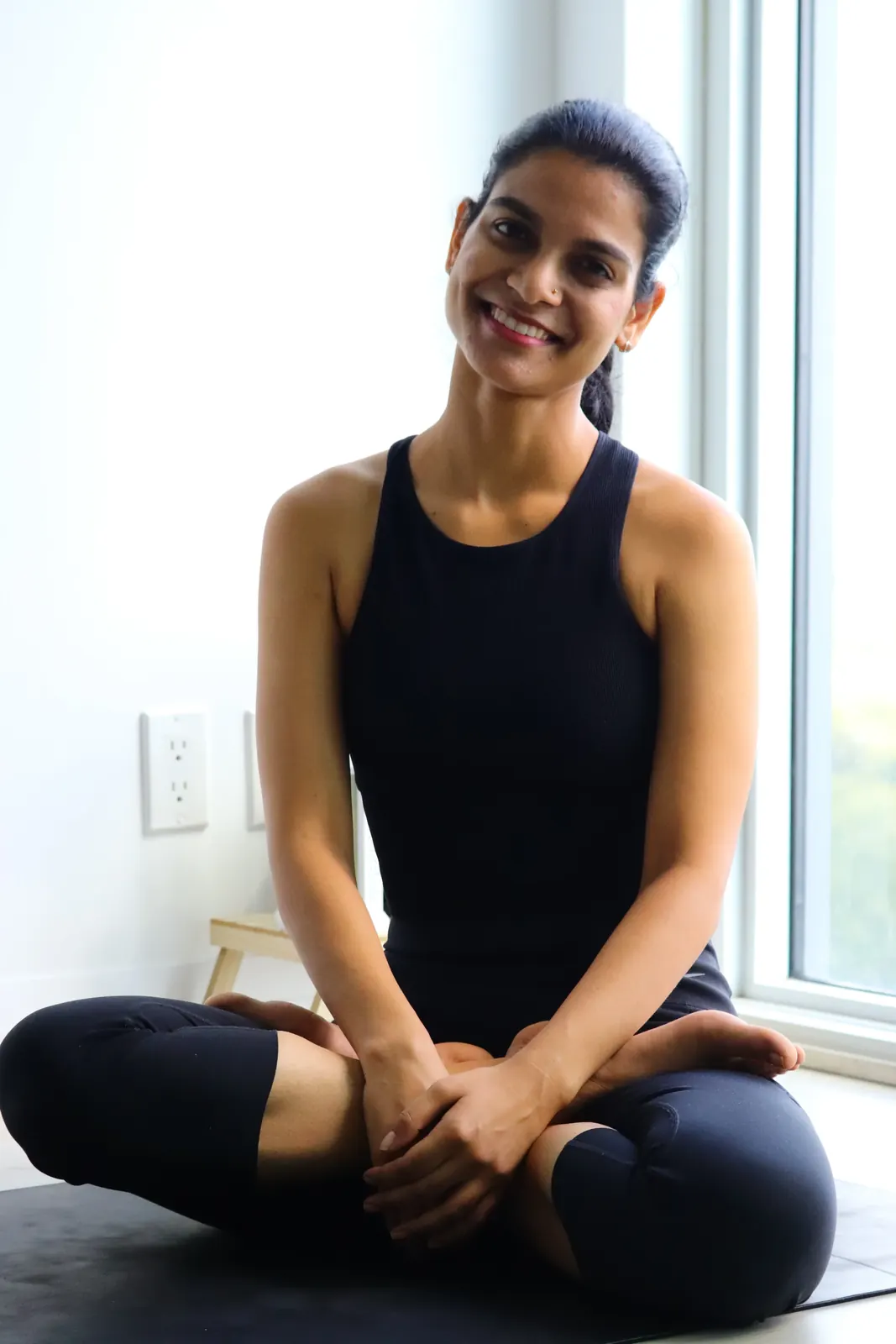
Yoga was never something I discovered. It was the rhythm of the house I grew up in — philosophy, breath, mindful movement and Ayurveda woven so quietly through ordinary days that I didn’t know it had a name. It shaped the way a morning opened, and the way movement was understood: as care rather than exercise — a few unhurried minutes offered to a racing mind, or to a body that had been asked to carry too much. The mat was one small part of it, and never the point.
That is the part I want you to have — not another hour to find, but a way of being at home in your own body while everything else continues. It was never meant to be hard to reach.
— Sakshi Juyal
Feel three minutes of it now ↓What Yogneeti means
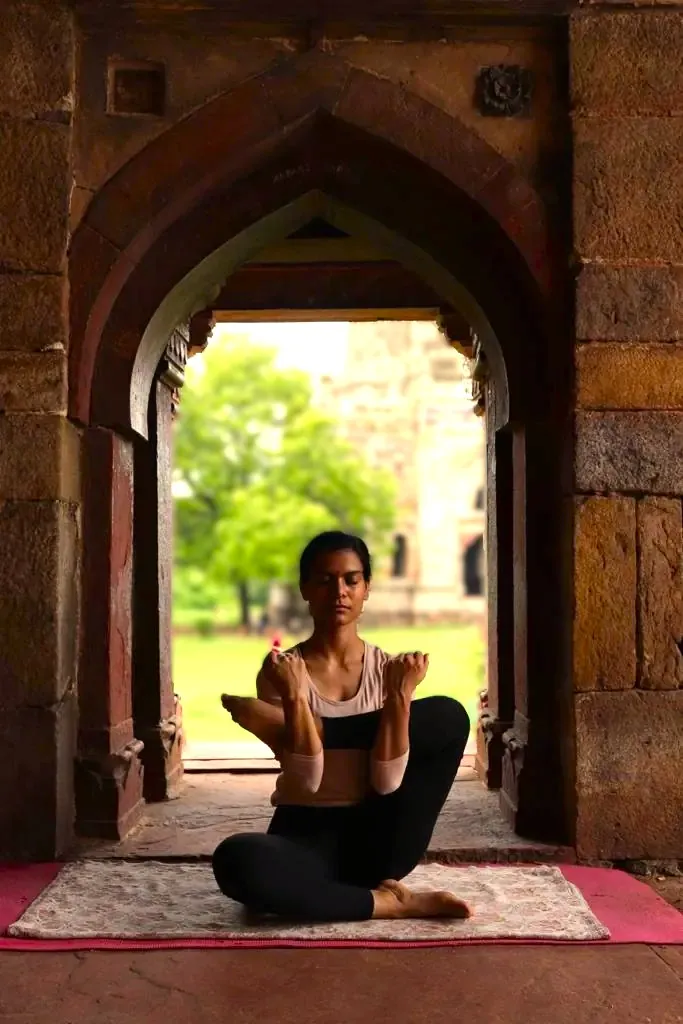
‘Yog’ means union and integration. ‘Neeti’ means moral conduct and guiding principles. Together, they signify a holistic approach to life—a practice that transcends physical postures to encompass a way of living rooted in balance and integrity.
When I first understood the word Neeti, it transformed how I saw my own morning practice—not as exercise, but as ethics of the body.
Yoga works from the outer body inward. Through steady, patient practice, the mind slowly comes free of its confinements. This journey from the physical to the spiritual is the practice itself—it does not end somewhere else.
I have watched a woman’s shoulders come down in a simple forward fold—nothing dramatic, just a body remembering it is allowed to let go. That is the moment I teach for.
Yoga that fits inside your life, not instead of it.
What this practice will never ask of you
Every woman I have taught carries her day in her body. It sits in the jaw, in the shoulders, in a breath held high in the chest — the residue of holding everything together for everyone else. Yoga should not be one more thing to hold. It should be the place you put it all down.
That is the whole purpose of Yogneeti: a way back into your own body that fits inside the life you already have. Not a retreat you cannot take, not a discipline you will have failed by Thursday. A few minutes, most days, that belong to you. Everything in it comes from the classical practice I trained in; only the dose is shortened to fit a day.
So the practice keeps three promises. It meets you where you are — on a chair, against a wall, on the floor beside your bed, in the four minutes between one demand and the next. It counts rest as the practice, not the reward for finishing everything else; a racing mind is not failing here, it is the reason we begin. And it never leaves you to choose alone: every practice is labeled by how you feel and how long you have, and when even that is too much, a guided path chooses for you.
It will never ask you to be flexible, to empty your mind, to find an hour, or to be watched. You practice alone, at home, with the door closed, and nothing here goes further than you choose. It asks one thing: that you arrive as you are.
You do not need to be ready. Arriving is the whole entrance.
Sakshi Juyal — Founder & Guide
A full-time yoga teacher since 2019, guiding women across the globe · Trained in the classical Hatha tradition at India’s national institute for yoga, New Delhi · Certified by the Yoga Certification Board
Her teaching spans Pranayama, Asana, Yoga Nidra and somatic meditation.
She’d rather you felt it
than believed it.
Three minutes. You don’t have to move, change, or go anywhere. Stay exactly where you are, and press play whenever you’re ready.
Jaw & Shoulder Release
3:12 · Somatic Audio
Read the transcript
Choose this when you notice clenching — jaw, shoulders, neck. Maybe you are holding the weight of the day in your jaw. It is okay to let it go. The work will still get done if you soften.
Let’s unlock the jaw joint. Let your teeth separate. Let your tongue rest heavy in the mouth. Inhale, bring your shoulders up to your ears. Squeeze tight. Squeeze out the tension. Exhale with a loud sigh. Drop. Let gravity pull them down. Once again, squeeze up. Hold it, hold it, and drop. Imagine heavy weights hanging from your arms, pulling your shoulders away from your ears. We’ll do three rounds. Inhale, lift. Exhale, drop. Inhale, lift. Exhale, drop. Inhale, lift. Exhale, drop.
Now make the movement smaller. Turn the head slightly right, back to the center. Slightly left. Back to the center. Keep it gentle. No stretching through pain. Wiggle your lower jaw side to side. Notice the looseness. Take one inhale, and a longer exhale, like a quiet sigh. As you exhale, soften the jaw again. Shoulders heavy, collarbones wide. Notice. Is there a little more space in the face or neck?
That’s one of thirty-seven — each a different way in.
Prefer to be guided one‑to‑one? Step into the 1:1 space — the Foundation Session →
“The practice is not the point. The rest of your day is.”
— Sakshi